
The Talon
Vol. 1 | Ed. 17
Essays Won’t Save Us
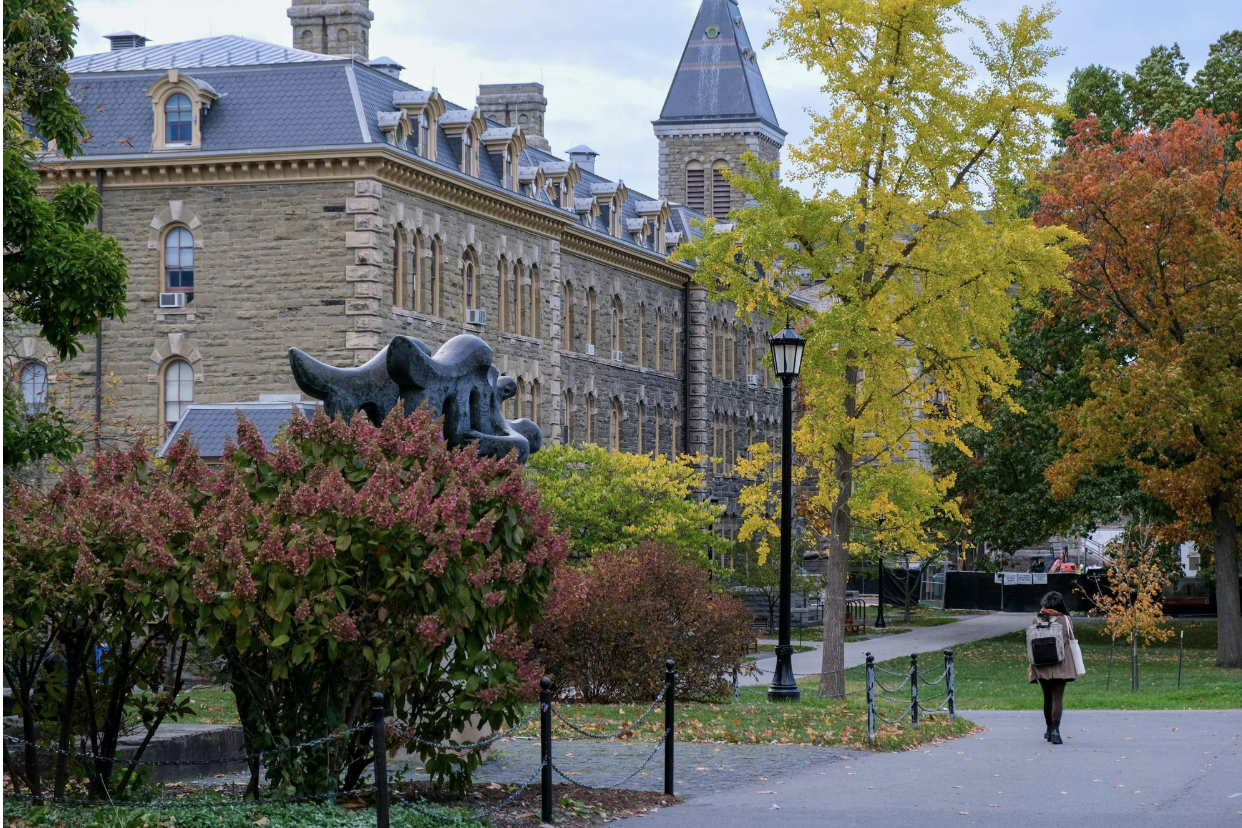
The most terrifying detail of the Cornell 7 case isn’t the assault itself; it is the amount of people who knew about the assault. The way the fraternity did nothing about it, even after hearing about the gruesome plan, is incredibly disturbing. When the victim spoke up, she was verbally insulted and threatened by her fellow students. Jane Doe wasn’t, and still isn’t, being protected. Even scarier is the sheer amount of people who have stories exactly like Doe’s.
In Ithaca, New York, on the Cornell University campus in 2024, a woman we’re going to call Jane Doe was sexually assaulted by seven fellow students. When fifty other men knew it was happening beforehand, not a thing was done to prevent the act. Jane Doe was intoxicated with at least ten drinks in her system beforehand, and two of the men drugged her with ketamine.
When Doe spoke up about the assault, the campus police decided to deal with it privately, rather than actually taking it to the police. The punishments Cornell University decided were fair for drugging and assaulting a woman were to expel two of the men. According to Tarana Burke, the rest of the men were “suspended, sent to workshops, and assigned essays.” When going ten miles over the speed limit, you can get a two-hundred-dollar fine. That is still a worse punishment than these men received.
Cornell themselves has written multiple articles addressing the matter, and defends their stance by stating “any suggestion that the university did not impose consequential punishments for those involved is false.” They argue that saying their chosen punishment was minimal is “irresponsible.” However, I strongly disagree. I believe that speaking out about Cornell’s negligence in dealing with the case brings justice to Jane Doe, the victim in question. If we stop the abuse of power now, it can only help future situations and the ways of handling them.
Due to this unfair treatment and crazy scenario, the case is going viral on the internet. As a result, many women have created content with the hashtag #WeAreJaneDoe to spread awareness about the case. Most of these posts talk about their own similar experiences or encourage other women to speak up and speak loud about the Cornell case. The phrase that is being used most, “We are all Jane Doe until none of us are,” emphasizes the importance of spreading awareness of the commonality of hushed-up sexual assault cases, especially in college settings.
A sophomore student at Flagstaff High School, Arianna Taylor, stated that she was “revolted and devastated” while hearing and reading about the case. Taylor believes that the #WeAreJaneDoe trend is “both helpful and harmful” in her opinion, and that while it helps boost the story and bring justice, it “takes a lot to get a place like Cornell to listen.” The way she sees it, the “government in general does not listen to the people,” and it should never come to a point where civilians have to research and release information on a case like this all on their own. In Taylor’s words, “How many movements do we have to make before it’s ‘too much’? How long until the government finally listens to us, if they ever will?” I completely agree; how can we, as women and as civilians, ever feel safe in the world we live in if we keep letting these things slide? We have to work to protect the people, because in the end, “all of us are Jane Doe until none of us are.”